If you’re thinking about buying, listing, or scaling an Airbnb in Miami, you’re not entering a simple market, you’re stepping into one of the most regulated short-term rental environments in the U.S.
And that’s exactly where most investors make their first mistake. They approach Miami like any other tourist-heavy destination. They analyze demand, nightly rates, occupancy trends… and assume everything else will somehow “fall into place.”
It won’t, because in Miami, your success doesn’t start with pricing or marketing. It starts with whether your property is even allowed to operate.
And the uncomfortable truth is this: A large percentage of Airbnb listings in Miami are either partially compliant, or completely illegal. Some survive for months. Some even generate decent revenue. Until they don’t.
This guide is not here to give you a simplified answer like “yes, Airbnb is legal.” It’s here to show you how the system actually works, and why understanding it deeply is the only way to build something sustainable.
Why Miami is so strict with short-term rentals
Miami’s regulatory environment didn’t come out of nowhere. It’s the result of years of tension between tourism growth and residential quality of life.
On one side, you have:
- A massive tourism-driven economy
- Strong investor interest
- High short-term rental demand
On the other:
- Rising housing prices
- Local residents being priced out
- Noise, parties, and “hotelization” of neighborhoods
The city didn’t want to kill short-term rentals entirely, because tourism is a core economic driver. But it also couldn’t allow unrestricted growth.
So instead of banning Airbnb, Miami introduced a controlled access model. That means:
Short-term rentals are allowed, but only in specific zones, and only under strict operational conditions.
This is fundamentally different from cities that either fully allow or fully ban STRs. Miami sits in the middle, and that middle is where things get complicated.
Is Airbnb legal in Miami?
The technically correct answer is yes. But a more accurate answer would be:
👉 Airbnb is legal in Miami only when multiple independent conditions are satisfied at the same time.
Those conditions include:
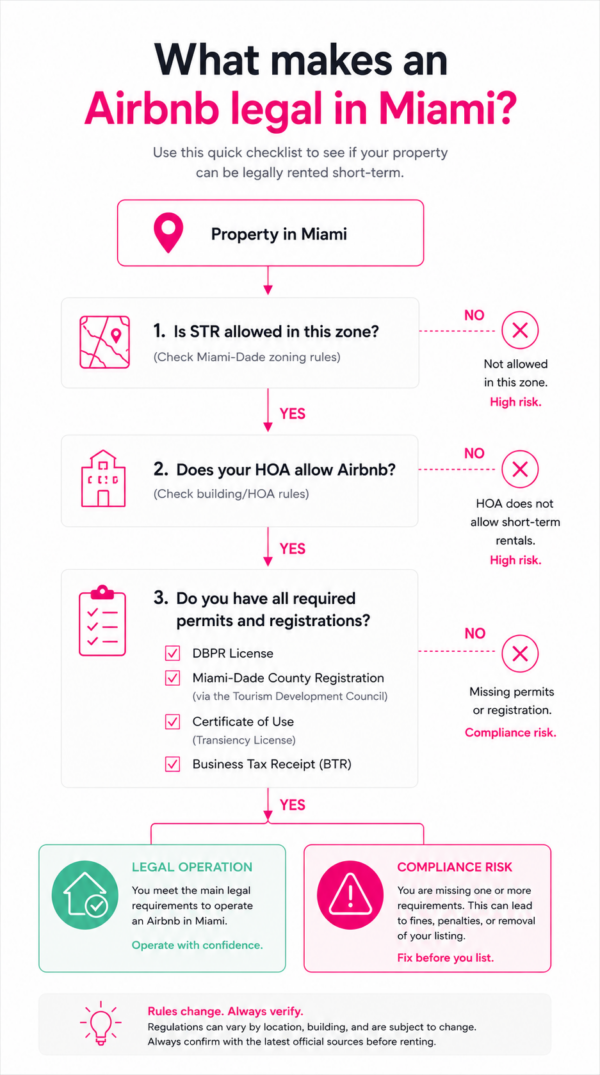
- The property being located in a zone that allows short-term rentals
- Full compliance with city, county, and state licensing requirements
- Adherence to operational rules such as occupancy limits and safety standards
The reason this matters is simple: you can have a listing that is active, booked, and generating revenue, and still be operating illegally. This is one of the biggest traps in the Miami market. Visibility does not equal compliance.
Platforms like Airbnb do not validate your legal status before allowing you to list. So the responsibility is entirely on you.
Where Airbnb is allowed in Miami (zoning explained)
Zoning is not just one of the factors, it is the foundation of everything. Miami uses zoning laws to determine whether a property can legally operate as a short-term rental. And these rules are not flexible.
In general, Airbnb in Miami is allowed in:
- Multifamily residential zones
- Commercial zones
- Certain mixed-use developments
These areas are designed to accommodate transient populations, such as tourists and short-term residents. However, Airbnb is typically restricted or prohibited in:
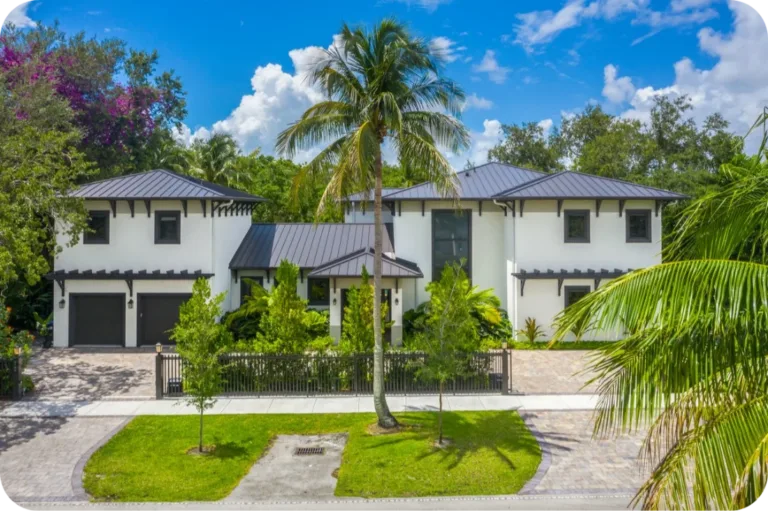
- Single-family residential neighborhoods
- Low-density zones intended for long-term housing
The logic behind this is straightforward: Miami wants to preserve residential stability in certain areas while concentrating tourism in others.
What this means in practice
This is where things get interesting, and where most investors go wrong. Imagine two properties:
- Same distance from the beach
- Same interior quality
- Same purchase price
From a pure investment perspective, they look identical, but zoning changes everything. While one property is fully legal, scalable and sellable as an STR asset, the other might be illegal for short-term rentals, at constant risk of fines, with limited resale appeal.
This is why experienced operators don’t start with “best ROI areas.” They start with:
👉 “Where can I operate without risk?” Everything else comes after that.
Let’s check if your home is a good fit!
If you’re curious:
- whether your home would be a good fit with Casiola
- how much revenue it could realistically generate
- and what your first year with professional management could look like
👉 You can request a no-obligation performance check and first-year earning estimate with Casiola.
Required licenses and registrations
Once zoning is confirmed, the next layer is compliance, and this is where the process becomes operationally complex. Running an Airbnb in Miami is not a passive activity. From a regulatory perspective, you are operating a business. And that business requires multiple approvals across different levels of government.
Core requirements (what you actually need to do, step by step)
1. State License (Florida level)
Issued by the Florida Department of Business and Professional Regulation (DBPR)
👉 Official resource: https://www.myfloridalicense.com/DBPR/hotels-restaurants/vacation-rentals/
This is your entry point into the legal system as a short-term rental operator in Florida. But in practice, this is where many people already make mistakes.
What you actually need to do:
- Register your property as a “Vacation Rental”
- Choose the correct category:
- Vacation Rental – Condo
- Vacation Rental – Dwelling
- Submit:
- Proof of ownership (or signed property management agreement)
- Property address and unit details
- Basic safety compliance (fire safety, occupancy readiness)
Processing time:
- Typically 1–3 weeks, assuming documentation is correct
Cost:
- Roughly $150–$300 per year (varies slightly)
BUT BE CAREFUL! This license does NOT mean your Airbnb is legal in Miami. It only means that the State of Florida recognizes your property as a short-term rental. You can still be fully licensed at the state level, and completely illegal at the city level.
Common mistakes:
- Selecting the wrong license type (very common with condos vs houses)
- Forgetting annual renewal (licenses expire silently)
- Not updating the license after ownership or management changes
2. Miami-Dade County Registration
👉 Official resource:
https://www.miamidade.gov/global/service.page?Mduid_service=ser1512065909617136
This is where your operation becomes visible at the county level, which is critical for tax and enforcement purposes.
What you actually need to do:
- Register your property as a short-term rental with Miami-Dade County
- Obtain a registration/account number used for:
- Tourist Development Tax reporting
- Compliance tracking
This registration connects your Airbnb activity to the tax system. Even if platforms like Airbnb collect some taxes you are still responsible for being properly registered.
Without this:
- Your tax reporting may be incomplete
- You may fail compliance checks
- You create issues during audits or property sale
Many operators assume: “Airbnb handles taxes, so I’m covered.” But that’s not how it works. Airbnb may collect and remit certain taxes, but you are still the registered taxpayer in the system. If your registration doesn’t exist or is incorrect, you are exposed.
3. City of Miami Certificate of Use (CU)
👉 Official resource:
https://www.miamigov.com/Services/Permits-Licenses/Certificate-of-Use
This is arguably the most important document in the entire process. Because this is where zoning is officially verified.
Certificate of Use (CU) actually confirms that your property is located in a zone that allows short-term rentals, and that your intended use (Airbnb) is legally permitted at that address
Without this document your operation is considered illegal, regardless of anything else.
What you need to submit:
- Property details (address, unit type)
- Proof of ownership or authorization
- Zoning verification (handled within the application process)
- In some cases:
- Floor plans
- Parking details
- Building compliance info
Processing time:
- Typically 2–4 weeks, but can take longer if zoning is unclear
Cost:
- Usually $150–$300 annually
Critical real-world detail: This is where most deals fall apart. You can:
- Buy a property
- Renovate it
- Furnish it
And only then discover that you cannot obtain a Certificate of Use for short-term rental. At that point, your entire STR strategy collapses. So, a pro tip is to always verify CU eligibility before buying the property. Not after.
4. Business Tax Receipt (BTR)
👉 Official resource:
https://www.miamigov.com/Services/Permits-Licenses/Business-Tax-Receipt
This is your official local business license. Think of it as the final step that activates your operation as a legal business within the city.
What you actually need to do:
- Apply for a Business Tax Receipt with the City of Miami
- Provide:
- Your Certificate of Use
- Your business/entity details
- Your federal EIN (if applicable)
With this you actually register your Airbnb activity as a taxable business, which allows the city to track and audit your operations, and enables legal operation within city limits.
Cost:
- Typically $50–$200 per year
Why this licenses and registrations process is often misunderstood
Most investors treat this as a simple checklist:
- Get license
- List property
- Start earning
But that’s not how the system actually works.
In reality, each of these steps:
- Has renewal requirements (annual in most cases)
- Can be revoked if you violate rules
- Is subject to random audits and enforcement checks
- Must remain consistent across all systems (state, county, city)

Taxes you must pay
One of the biggest misconceptions about running an Airbnb in Miami is that “Airbnb handles all taxes.” That’s only partially true.
In reality, you’re dealing with multiple layers of taxation, and understanding how they work is critical for both compliance and profitability.
As an Airbnb operator in Miami, you typically pay:
- Florida State Sales Tax (~6%)
👉 https://floridarevenue.com/taxes/taxesfees/Pages/sales_tax.aspx
This applies to your entire booking value, including cleaning fees. Even if Airbnb collects it, you are still expected to be registered with the state tax system.
- Miami-Dade Tourist Development Tax (~6%)
👉 https://www.miamidade.gov/global/service.page?Mduid_service=ser1512065909617136
This is the so-called “bed tax”, applied to short-term stays. Combined with state tax, your total tax burden is already around ~12%.
- Additional local surtaxes
Depending on the area, smaller taxes may apply, but over time, they directly impact your margins.
All this matters because your actual revenue is always net of taxes. You should:
- Register with Florida and Miami-Dade, even if Airbnb collects taxes
- Check what Airbnb actually covers (don’t assume)
- Track your own revenue and taxes (don’t rely only on platform reports)
- Reconcile monthly to catch issues early
Key rules you must follow (operating legally day-to-day)
Everything we’ve covered so far relates to legal requirements to start an Airbnb business in Miami: zoning, licenses, registrations, and taxes.
What follows is just as important. Because once your Airbnb is up and running, you are entering a second layer of regulation: Legal requirements for operating the business on a daily basis.
Miami doesn’t just regulate whether you can operate. It regulates how you operate.
Occupancy limits
Occupancy is not a flexible guideline, it’s a regulated limit tied to your property. In most cases, it depends on the number of bedrooms and the size and layout of the unit.
A commonly used standard is:
👉 2 guests per bedroom + 2 additional guests
This might seem straightforward, but exceeding these limits is one of the fastest ways to trigger complaints, especially in condo buildings or mixed-use areas. This leads to inspections, warnings and eventually fines.
Noise and guest behavior
This is where the responsibility shifts clearly onto you as the operator. Miami has strict rules around noise levels, parties and events, general guest conduct.
👉 You are legally responsible for your guests’ behavior. It doesn’t matter if:
- you didn’t know
- you weren’t present
- or the guest “promised to behave”
If a neighbor files a complaint or authorities are called: you are the one held accountable! This is why experienced operators implement:
- clear house rules
- guest screening
- and in some cases, noise monitoring systems
Safety requirements
Safety compliance is not something you “add later.” It’s part of being legally operational from day one. At a minimum, your property should include:
- working smoke detectors
- fire extinguishers
- clearly accessible exits
These may sound basic, but they are often the first things checked during an inspection. And unlike some other violations: safety issues can trigger immediate action. There’s very little tolerance here, especially in buildings with shared occupancy.
Penalties for violations
This is where everything becomes very real. Miami is not a “light enforcement” market. Rules are actively monitored, and penalties are enforced.
Violations can result in:
- fines ranging from $1,000 to $5,000 per incident
- daily penalties if the issue continues
- and in more serious cases, immediate shutdown orders

Real investor mistakes (and why they happen)
Most people don’t fail with Airbnb in Miami because the market doesn’t work, but because they make the wrong calls before they even start. Those decisions don’t feel wrong at the time. Everything looks logical on paper: good location, solid numbers, strong demand. The problem is that Miami doesn’t reward “good-looking deals.” It rewards correctly structured deals.
The biggest mistake: skipping zoning
This is where most problems begin. You find a property, run the numbers, compare it with other listings, and everything seems aligned. Then you move forward, without actually verifying whether short-term rentals are allowed for that specific unit.
Later, you realize you can’t legally operate. At that point, your options are limited:
- switch to long-term rental with lower returns
- or operate with constant risk
Either way, the original investment no longer makes sense.
Relying on surface-level advice
Another common issue is trusting opinions that sound right, but aren’t complete. You’ll often hear things like: “This area is great for Airbnb.” And sometimes it is. But that doesn’t automatically mean your specific property is compliant.
Short-term rental investing in Miami sits between real estate, regulation, and operations. If someone is missing one of those layers, the advice is incomplete, and that’s where mistakes happen.
“We’ll fix it later” mindset
Some investors go live first and deal with compliance later. In the beginning, it can look like it works. Listings go up, bookings come in, and everything seems fine. But Miami is not a market where you can ignore rules for long.
Once something gets flagged, things move quickly: inspections, fines, and potential shutdowns.
Ignoring HOA rules
Even if everything checks out on paper: zoning, licenses, taxes – your building can still shut you down. HOAs and condo associations have their own rules, and in many cases: those rules override everything else
This catches a lot of people off guard. They assume that if the city allows Airbnb, the property is good to go. But in reality, you’re always dealing with two layers:
- public rules (city, county, state)
- private rules (HOA, building management)
Both need to align.

Best areas for Airbnb in Miami (from a legal perspective)
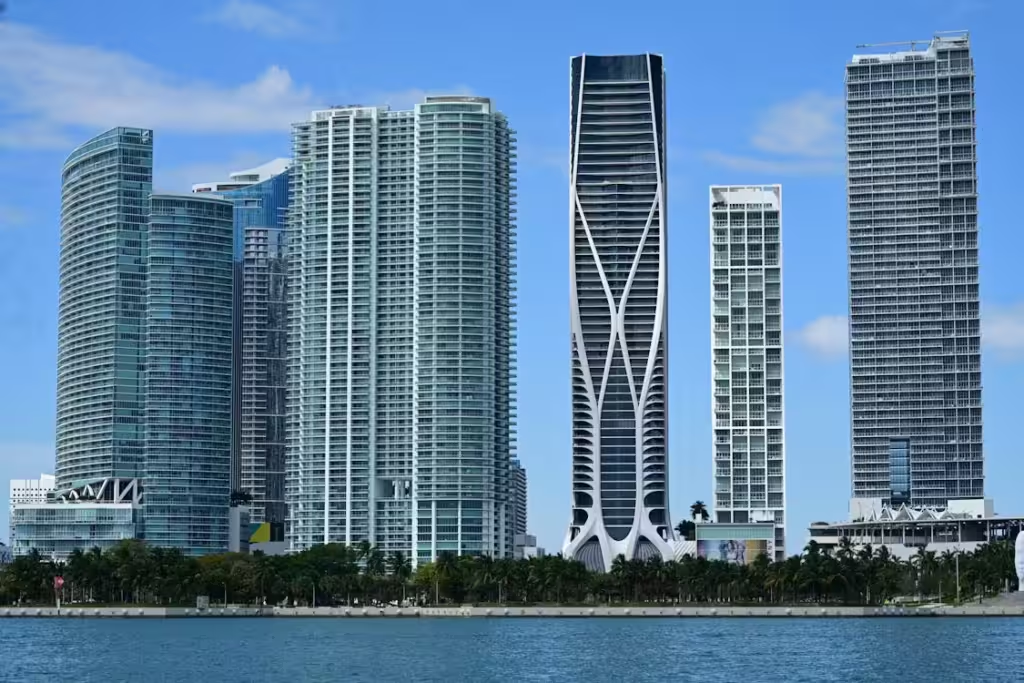
In practice, most Airbnb-friendly properties in Miami are concentrated in parts of the city that are already built around tourism and transient living. That typically includes areas like:
- Downtown Miami
- Brickell
- certain parts of Miami Beach
- and selected zones in Wynwood
These locations tend to work not because they are trendy, but because they are aligned with how the city wants short-term rentals to operate
Why these areas are different?
These parts of Miami generally have three things in common. First, zoning supports short-term rentals, so you’re not constantly operating on the edge of compliance.
Second, the properties themselves, often condos or mixed-use buildings, are designed for shorter stays, with infrastructure that supports guest turnover.
And third, they are naturally tied to tourism, which means demand is consistent and expected, not disruptive.
Ready to do this the right way?
Most people come into Miami thinking this is a numbers game. Find the right property, set a good price, keep occupancy high, and everything else will follow.
For a while, that’s exactly how it looks. Bookings come in. Revenue starts building. Nothing seems complicated. And that’s where the trap is. Because Miami rarely punishes mistakes immediately. It lets them sit in the background, until they start affecting the business all at once.
It’s usually not one big issue. It’s a few small ones that were never fully handled. A document that wasn’t properly set up. Taxes that don’t quite match. A guest situation that escalates faster than expected. None of these things feel critical on their own, but together they create friction. And over time, that friction turns into risk.
That’s the difference most people don’t see at the beginning. In Miami, the problem is not getting started, but staying stable. And stability doesn’t come from working harder or reacting faster. It comes from having a system that holds everything together, legally, operationally, and financially.
This is where Casiola tends to make a real difference. Not because it does anything “magical,” but because it removes the guesswork. The setup is done properly from the start, compliance is not something you think about only when there’s a problem, and the day-to-day operation runs in a way that avoids unnecessary issues.
That doesn’t mean things never go wrong. It means when they do, they’re handled within a structure that’s already in place. And in a market like Miami, that’s what separates properties that keep performing from those that slowly run into problems.
Two properties can generate similar revenue for a while. The one with a solid system behind it is the one that keeps going.
In the end, that’s really what this comes down to. Not shortcuts, not quick wins, but building something that actually holds together over time.
Disclaimer:
Short-term rental laws, zoning rules, licensing requirements, and tax regulations in Miami and Miami-Dade County can change frequently. While we’ve done our best to keep this guide accurate and up to date, regulations may vary depending on the exact property, building, zoning designation, and municipality. Always verify the latest requirements directly with official city, county, and state authorities before purchasing, listing, or operating a short-term rental property.
Let’s check if your home is a good fit!
If you’re curious:
- whether your home would be a good fit with Casiola
- how much revenue it could realistically generate
- and what your first year with professional management could look like
👉 You can request a no-obligation performance check and first-year earning estimate with Casiola.