
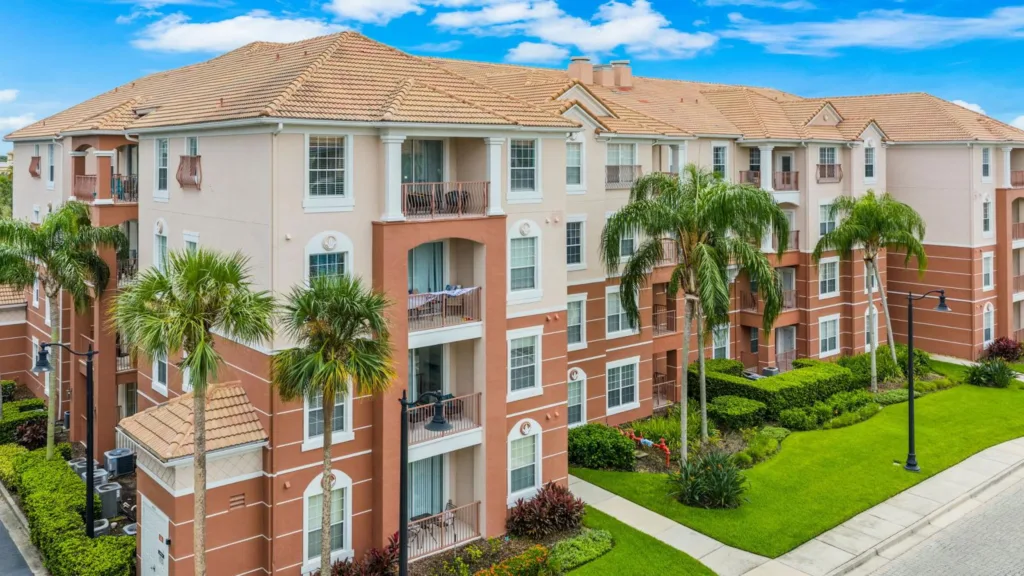
How Casiola outperforms the Orlando market, with data
2026 Orlando market data
Real 2026 benchmarking data broken down by property type – so you can see exactly where the gap is and what it’s costing you.
Most owners assume their home is doing reasonably well in the Orlando vacation rental market. The 2026 data says otherwise, and the gap is specific enough to put a dollar figure on.
This isn’t a general comparison between good and bad management. It’s a breakdown by property type — condos, townhouses, homes with private pools, multi-bedroom properties — showing exactly how Casiola-managed homes perform against the rest of the Orlando market right now.
If you own one of these property types in Orlando, one of these rows is about you.
The Orlando vacation rental market gap, by property type
Adjusted RevPAR – revenue per available night, stripped of blocked dates and panic discounts, is the most honest measure of how a property is actually performing. Here’s where the Orlando market stands in 2026, by property type.
Market avg. Adj. RevPAR
$79
Casiola Adj. RevPAR
$140
+77% – $61 more per available night
Market avg. Adj. RevPAR
$40
Casiola Adj. RevPAR
$80
+100% — double the market average
Market avg. Adj. RevPAR
$78
Casiola Adj. RevPAR
$96
+23% — $18 more per available night
Market avg. Adj. RevPAR
$55
Casiola Adj. RevPAR
$81
+47% — $26 more per available night
What this gap costs you annually
A private pool home earning market average instead of Casiola average loses $61 per available night. Over 365 nights, that’s a potential gap of more than $22,000 per year, before accounting for differences in paid occupancy.
For a townhouse sitting at market average, the gap is even more direct: you’re earning half of what the same property type generates under professional management.
Want to know what your specific property should be earning?
Get a FREE revenue analysis based on your property type and location.
A full calendar does not always mean strong revenue
Here’s a question most owners can’t answer honestly: how many of your occupied nights were actually booked at a healthy rate?
Owner stays, blocked dates, discounted last-minute bookings, promotional rates that barely cover the costs – all of these can make a calendar look busy. But they do not all contribute equally to revenue. That is why we look at Adjusted Paid Occupancy: the share of available nights that were booked by paying guests at real, revenue-producing rates.
Orlando Market Average
25.3%
Adj. Paid Occupancy 2026
Casiola Orlando
42.7%
Adj. Paid Occupancy 2026
Casiola properties convert available nights into paying guests at nearly twice the market rate.
Numbers like this come from many small decisions made every day: where the home is listed, how it appears to guests, when prices are adjusted, and which bookings are actually worth taking.
That is why a busy calendar can still be misleading. Some nights bring real revenue. Others only fill space. For owners, that difference matters more than occupancy alone.
The slow season: where the Orlando vacation rental market gap is hardest to close yourself
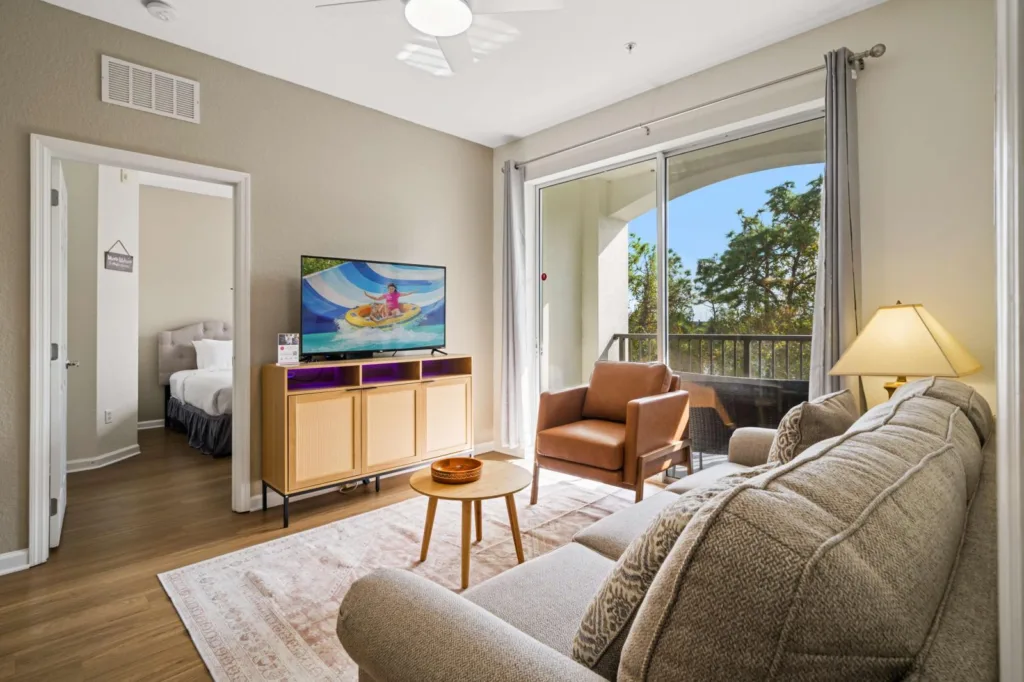
Spring break and peak summer are usually the easy part. Most Orlando homes can get bookings when demand is high. The harder months are August through December, when fewer owners can rely on the market to do the work for them. That is when management starts to show up in the numbers.
August: Market ADR (2-bed) $145 → Casiola $119 | But Casiola paid occ. 13.6% vs market 7.3%
September: Market RevPAR collapses to single digits on most property types. Casiola properties stay in double digits across the board.
October: While the market averages 7% paid occupancy, Casiola properties reach 19.6% — nearly three times the market rate in what most owners write off as a dead month.
Many owners treat the slower months as something they simply have to accept. But the gap is not only seasonal. It often comes down to how actively the property is priced, positioned, and distributed when demand is weaker.
The booking window: why your calendar is always behind
The anxiety every owner knows: you check your calendar two months out, see gaps, and reach for the discount button. It feels like the only lever you have.
It’s also the most expensive habit in vacation rental management.
Top-performing properties don’t fill their calendars at the last minute. They fill them early, at full rate, because demand was captured before the gaps appeared. Casiola properties in Orlando book an average of 68 days in advance, versus the market average of 53 days. That 15-day difference is the difference between holding your price and cutting it.
The real cost of late bookings
Every week you spend waiting for a last-minute booking is a week you’ve already given up pricing power. A property that fills 15 days later than average discounts more, earns less per night, and trains the market to expect lower rates from you.
The discount you offer today affects what guests expect to pay next month.
Curious how your booking window compares to the market?
A free analysis shows you exactly where you stand.
What drives the gap, and why it’s not about your property
The difference between Casiola-managed homes and the wider Orlando market is not only about the homes themselves. In many cases, similar properties can perform very differently depending on how they are priced, presented, distributed, and managed day to day.
A good vacation rental does not automatically reach the right guests. It still needs pricing that reacts to demand, photos and listing copy that give people confidence to book, visibility across the right channels, and a guest experience strong enough to generate reviews that help future bookings.
This is where many owners struggle, especially if they self-manage from a distance or work with a company that mainly handles the basics. The property may be good, but the execution around it is not active enough. Prices stay too high when demand drops, weak dates are noticed too late. Listings are not improved often enough, while reviews are treated as a result, not as part of the revenue engine.
None of these are available to the average self-managed owner or low-service agency at the same level of execution. They require infrastructure, data, and continuous active management that simply doesn’t exist in a part-time operation.
The home has potential, but the management around it is not doing enough to turn that potential into revenue. That is what the data above shows: active, professional management can materially change how much revenue a property captures, even in the same market.
See what your property should actually be earning
Get a free, personalized revenue analysis based on your property type, location, and the 2026 Orlando benchmarks. No guesswork — just your numbers.

Join Casiola
